לתשומת לב: הניווט בעמוד זמין בעברית. התוכן הרפואי המפורט בעמוד המקצועי מוצג בשלב זה באנגלית.
THD · HAL-RAR
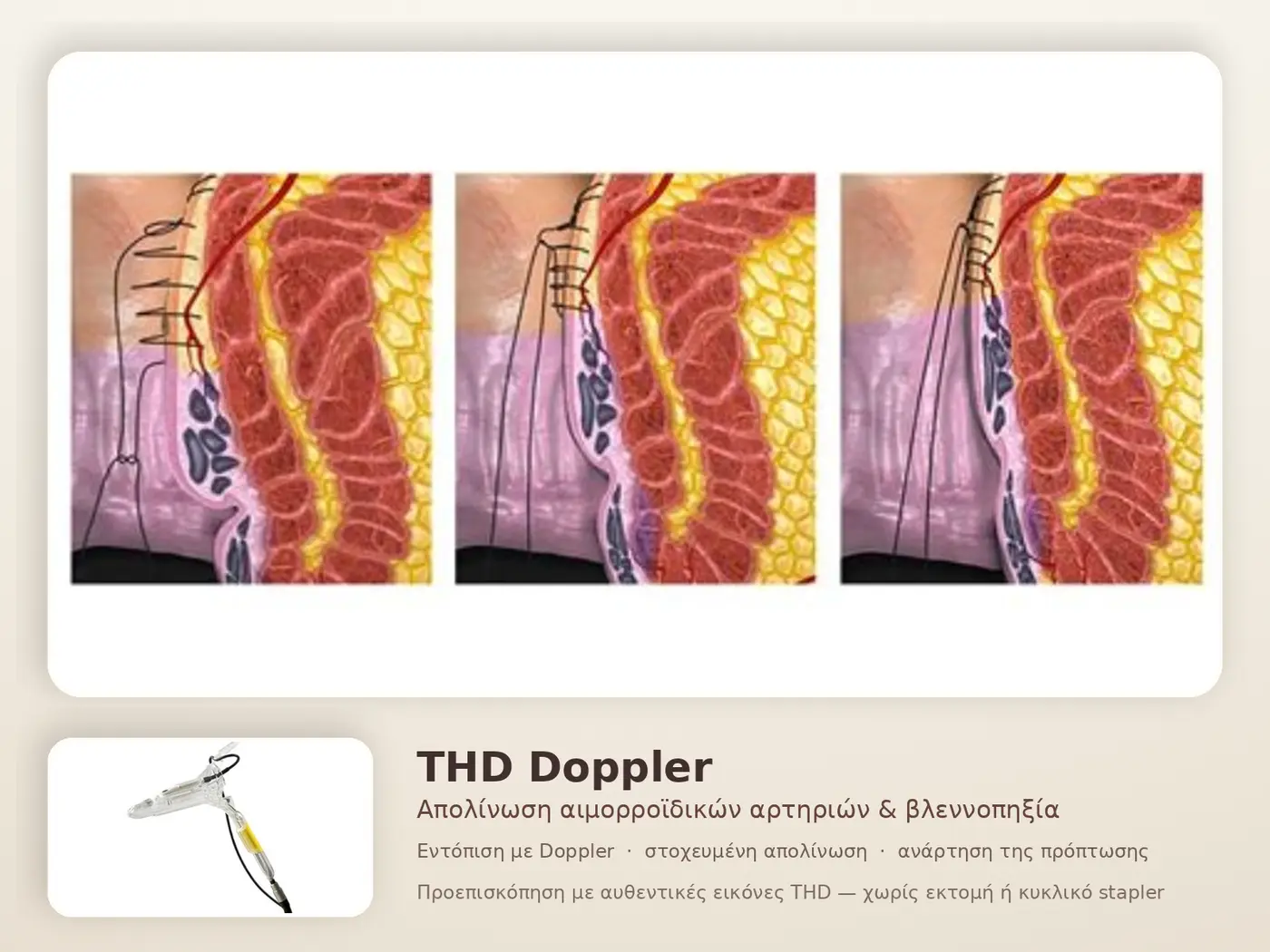
THD / HAL–RAR: haemorrhoidal artery ligation
Doppler-guided ligation of haemorrhoidal arteries and, when prolapse is present, mucosal lifting with mucopexy.
When it may be considered
Selected internal haemorrhoidal disease with bleeding and prolapse, without a major external component.
How the procedure works
THD uses Doppler to locate arteries and sutures to tie them off. Mucopexy (RAR) may be added for prolapse. Ligation and lifting address different components of the condition.
No anoderm is excised. It usually causes less early pain than excisional haemorrhoidectomy, but advanced disease may carry a higher risk of recurrence or persistent prolapse.
Before treatment
Clinical examination first establishes the cause of bleeding or prolapse. Previous treatments, medical conditions and medicines are reviewed. Do not stop blood thinners yourself; preparation and anaesthesia are planned individually.
Recovery and follow-up
Return to activities depends on the extent of the disease, the procedure and individual recovery. Patients receive instructions for pain relief, soft stools and follow-up. Pain, bleeding or temporary difficulty passing urine can occur. Severe or increasing pain, fever, heavy bleeding or inability to pass urine require prompt contact with the treating team or urgent assessment.
Choosing between treatments
Diagnosis, disease grade and any external component guide the choice. Conservative care and banding may be sufficient in selected cases. Rafaelo®, laser, THD/HAL–RAR and excisional haemorrhoidectomy have different indications and limitations.
Rafaelo®: radiofrequency treatment of haemorrhoidsCommon questions
Is the procedure completely painless?
Anaesthesia and postoperative treatment are tailored to each patient. Less discomfort in selected patients does not mean there is no pain or risk of complications.
Can haemorrhoids recur?
Yes. Persistent symptoms or recurrence may require reassessment and further treatment. Keeping bowel movements comfortable remains important.
Is it suitable for everyone?
No. Major prolapse or a substantial external component may require a different approach. Examination and discussion of alternatives guide treatment selection.
Grades I–IV: a useful guide, not the only decision
Grade mainly describes internal haemorrhoidal prolapse. Bleeding, the external component, thrombosis, continence, previous procedures and patient priorities complete the picture.