Примечание: навигация по странице доступна на русском языке. Подробный медицинский текст этой специализированной страницы пока отображается на английском.
RAFAELO® · RFA
Rafaelo®: radiofrequency treatment of haemorrhoids
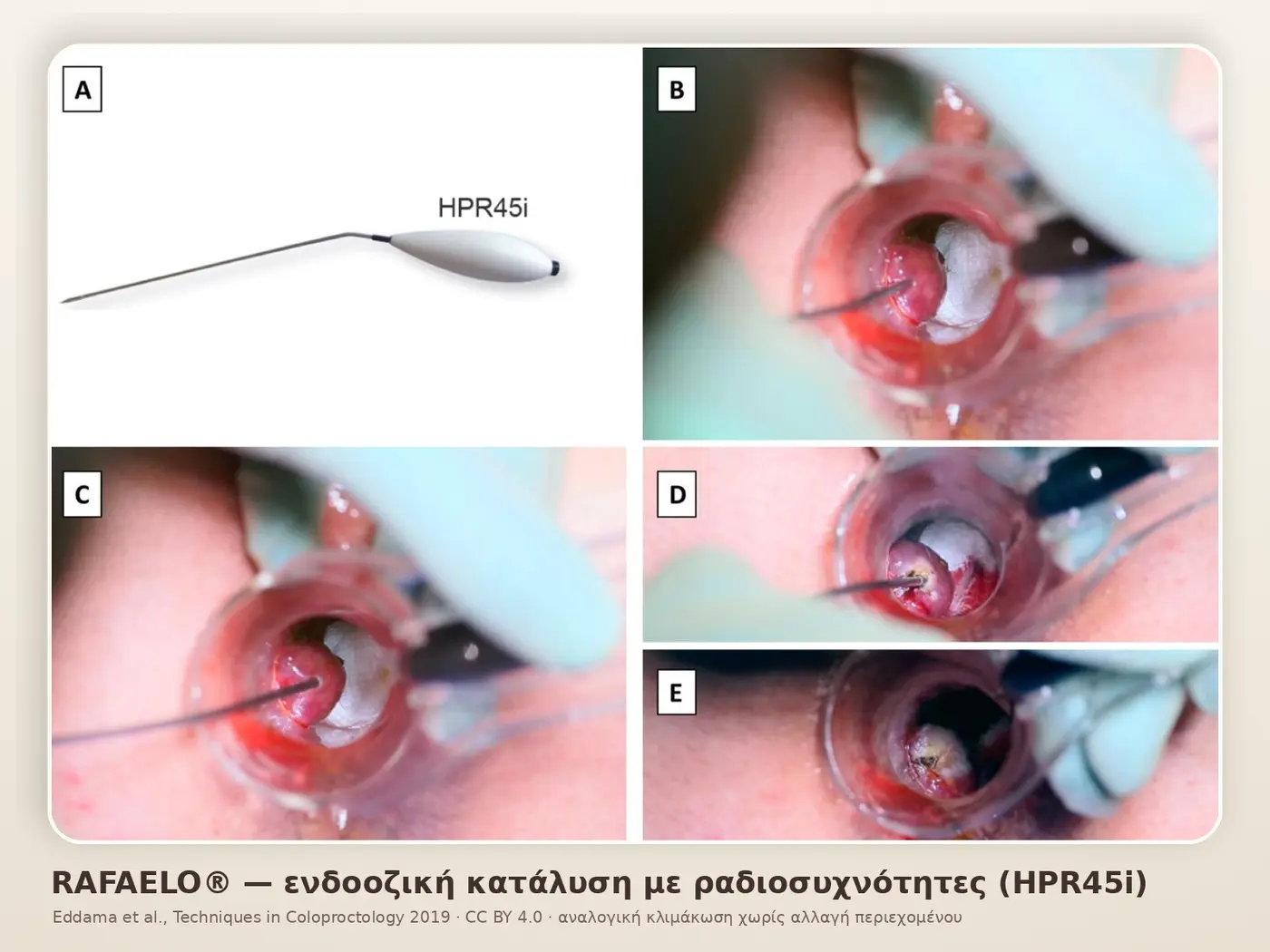
Controlled intratissue thermocoagulation of an internal haemorrhoid with a fine radiofrequency probe, aiming for shrinkage and fibrosis without anoderm excision.
When it may be considered
Selected symptomatic internal haemorrhoids, mainly grade II–III, without a dominant large external component. Suitability is confirmed after proctological examination.
How the procedure works
Rafaelo® uses radiofrequency energy to shrink haemorrhoidal tissue through controlled heating. It is not a laser procedure. A large external component is not automatically removed.
After local anaesthesia, the probe is placed centrally within the haemorrhoidal tissue above the dentate line and delivers controlled radiofrequency energy. Early recovery is often faster than after excisional haemorrhoidectomy, but residual prolapse, recurrence or further treatment remain possible.
Before treatment
Clinical examination first establishes the cause of bleeding or prolapse. Previous treatments, medical conditions and medicines are reviewed. Do not stop blood thinners yourself; preparation and anaesthesia are planned individually.
Recovery and follow-up
Return to activities depends on the extent of the disease, the procedure and individual recovery. Patients receive instructions for pain relief, soft stools and follow-up. Pain, bleeding or temporary difficulty passing urine can occur. Severe or increasing pain, fever, heavy bleeding or inability to pass urine require prompt contact with the treating team or urgent assessment.
Choosing between treatments
Diagnosis, disease grade and any external component guide the choice. Conservative care and banding may be sufficient in selected cases. Rafaelo®, laser, THD/HAL–RAR and excisional haemorrhoidectomy have different indications and limitations.
THD / HAL–RAR: haemorrhoidal artery ligationCertified Rafaelo® training
F Care Systems · Enddarmpraxis Köln, Germany · 26 September 2025. This certificate documents training in the procedure.
View certificate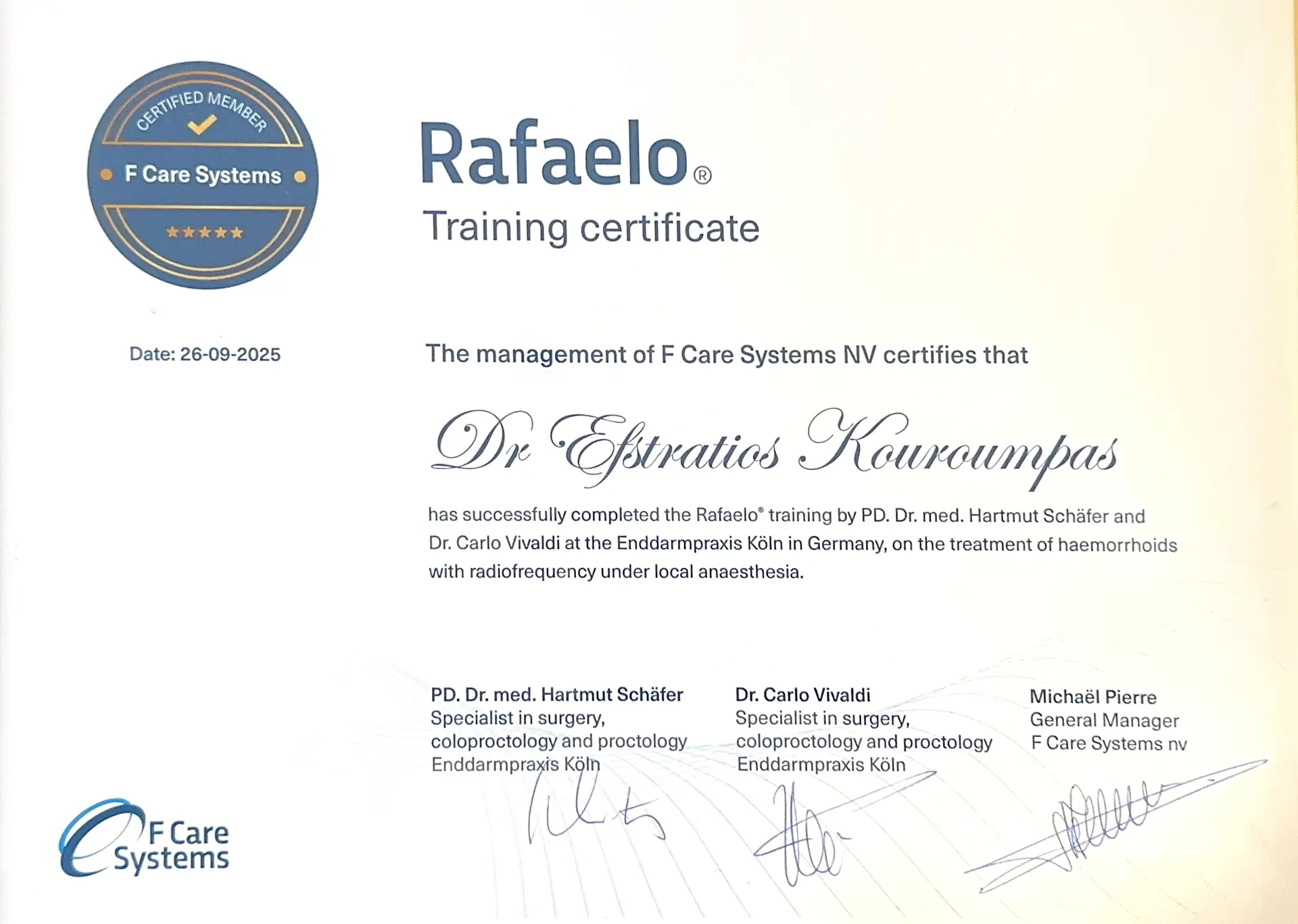
Common questions
Is the procedure completely painless?
Anaesthesia and postoperative treatment are tailored to each patient. Less discomfort in selected patients does not mean there is no pain or risk of complications.
Can haemorrhoids recur?
Yes. Persistent symptoms or recurrence may require reassessment and further treatment. Keeping bowel movements comfortable remains important.
Is it suitable for everyone?
No. Major prolapse or a substantial external component may require a different approach. Examination and discussion of alternatives guide treatment selection.
Grades I–IV: a useful guide, not the only decision
Grade mainly describes internal haemorrhoidal prolapse. Bleeding, the external component, thrombosis, continence, previous procedures and patient priorities complete the picture.